
Low Foam Surfactants Market is Expected to Reach USD 24.68 Million by 2035, Registering a CAGR of 4.35% | MRFR
The global low foam surfactants market is poised for significant expansion over the coming decade, driven by increasing demand across industrial cleaning, food processing, and personal care applications. According to a comprehensive market research report, the sector is expected to witness sustained growth from 2025 through 2035, fueled by technological advancements in surfactant chemistry and growing environmental regulations favoring sustainable cleaning solutions.
The Low Foam Surfactants Market reached an estimated USD 16.04 Million in 2025 and is projected to grow from USD 16.74 Million in 2026 to USD 24.68 Million by 2035, registering a CAGR of 4.35% over the forecast period (2026–2035)
Market Overview and Segmentation
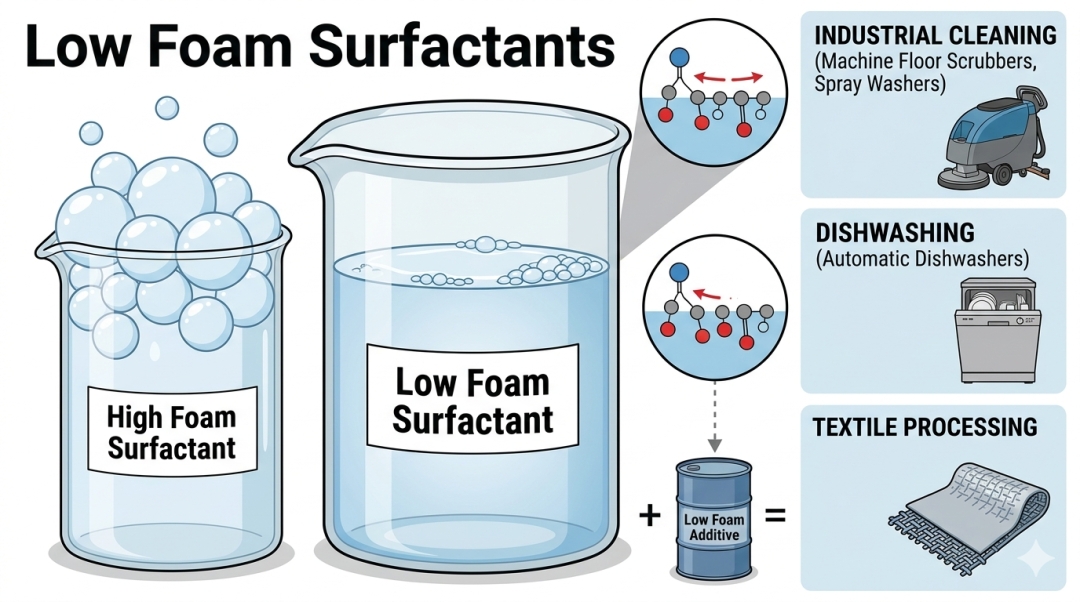
The low foam surfactants market encompasses a diverse range of chemical compounds designed to reduce or eliminate foam formation during industrial and commercial processes. These specialized surfactants are critical in applications where excessive foam can impede operational efficiency, compromise product quality, or create safety hazards. The market is segmented by type, application, and geography, providing stakeholders with detailed insights into emerging opportunities and competitive dynamics.
By type, the market is categorized into non-ionic, amphoteric, and cationic surfactants. Non-ionic surfactants represent the largest segment, comprising alcohol ethoxylates and EO/PO (ethylene oxide/propylene oxide) copolymers. Alcohol ethoxylates are widely utilized due to their excellent wetting properties, low toxicity profiles, and biodegradability, making them ideal for environmentally conscious formulations. EO/PO copolymers offer superior defoaming characteristics and temperature stability, positioning them as preferred choices in high-temperature industrial applications such as metal cleaning and metalworking fluids. Amphoteric surfactants, which exhibit both cationic and anionic properties depending on pH conditions, are gaining traction in personal care and home care formulations due to their mildness and compatibility with diverse ingredient systems. Cationic surfactants, though representing a smaller market share, remain essential in specialized applications requiring antimicrobial properties and substrate adhesion.
Application Landscape
The application spectrum for low foam surfactants spans multiple industries, each presenting distinct growth trajectories. Commercial machine dishwashing represents a substantial market segment, as food service establishments and institutional kitchens increasingly adopt automated cleaning systems that require precisely controlled foam levels to ensure optimal mechanical action and rinse efficiency. The food and dairy process cleaners segment is experiencing accelerated demand, driven by stringent hygiene standards in dairy processing, beverage production, and food manufacturing facilities where foam control is essential for clean-in-place operations.
Metal cleaning and metalworking fluids constitute another critical application area, with low foam surfactants playing a vital role in coolant systems, degreasing operations, and precision cleaning processes. The expansion of automotive manufacturing, aerospace production, and general metal fabrication activities across emerging economies is directly contributing to segment growth. In the home and personal care sector, manufacturers are increasingly formulating low-foam variants of laundry detergents, shampoos, and skin cleansers to meet consumer preferences for high-efficiency appliances and rinse-friendly products.
The pulp and paper industry relies heavily on low foam surfactants for pulping, deinking, and coating processes where foam accumulation can disrupt production continuity. Agrochemical formulations, including pesticides and herbicides, incorporate these surfactants as adjuvants to improve spray coverage and reduce drift without generating problematic foam during tank mixing. Oilfield chemicals represent a specialized but growing segment, as low foam surfactants enhance oil recovery operations and drilling fluid performance in challenging downhole environments. The textile industry utilizes these compounds in dyeing, finishing, and scouring processes where foam control directly impacts color consistency and fabric quality.
Download Report Sample Copy with TOC: https://www.marketresearchfuture.com/sample_request/8143
Regional Analysis
Geographically, the low foam surfactants market is analyzed across North America, Europe, Asia-Pacific, and the Rest of the World. North America maintains a mature market position, characterized by established industrial infrastructure, stringent environmental regulations, and high adoption rates of advanced cleaning technologies. The United States and Canada continue to drive demand through investments in food processing modernization and sustainable manufacturing practices.
Europe represents a significant market, with the European Union’s regulatory framework, including REACH regulations and circular economy initiatives, accelerating the transition toward bio-based and biodegradable surfactant alternatives. Countries such as Germany, France, and the United Kingdom lead in industrial applications, while Nordic nations demonstrate strong demand for environmentally optimized formulations.
Asia-Pacific is projected to exhibit the highest growth rate during the forecast period, underpinned by rapid industrialization, expanding manufacturing bases, and rising consumer spending on home and personal care products. China and India are pivotal markets, with substantial investments in food processing, textile production, and automotive manufacturing creating robust demand for industrial cleaning chemicals. Southeast Asian nations, including Vietnam, Indonesia, and Thailand, are emerging as attractive destinations for manufacturing relocation, further stimulating regional market expansion.
The Rest of the World category, encompassing Latin America, the Middle East, and Africa, presents untapped potential driven by developing industrial sectors, growing urbanization, and increasing awareness of operational efficiency in manufacturing processes. Brazil and Mexico in Latin America, along with Gulf Cooperation Council countries in the Middle East, are expected to contribute meaningfully to market growth through infrastructure development and industrial diversification initiatives.
Market Drivers and Future Outlook
Several macroeconomic and industry-specific factors are propelling the low foam surfactants market forward. Environmental sustainability has emerged as a primary driver, with manufacturers and end-users prioritizing biodegradable, renewable-based surfactants that minimize aquatic toxicity and reduce carbon footprints. Regulatory pressures regarding phosphate bans, volatile organic compound emissions, and wastewater discharge standards are compelling formulators to innovate toward low-foam, high-performance alternatives.
Technological advancements in surfactant molecular design, including the development of Gemini surfactants and enzymatically produced biosurfactants, are expanding the performance envelope of low foam products. Digitalization of manufacturing processes and the proliferation of Industry 4.0 technologies are enabling precise foam control in automated systems, creating demand for surfactants engineered for specific operational parameters.
Looking ahead to 2035, the low foam surfactants market is expected to benefit from the global transition toward sustainable chemistry, the expansion of emerging market manufacturing capabilities, and the continued evolution of consumer preferences toward efficient, eco-friendly products. Industry participants who invest in research and development, strategic partnerships, and geographic diversification are well-positioned to capitalize on the substantial opportunities presented by this dynamic market landscape.
Ask for Customize: https://www.marketresearchfuture.com/ask_for_customize/8143
Related Report
Media Contact
Company Name: Market Research Future
Contact Person: Media Relations
Email: Send Email
Country: United States
Website: https://www.marketresearchfuture.com


